

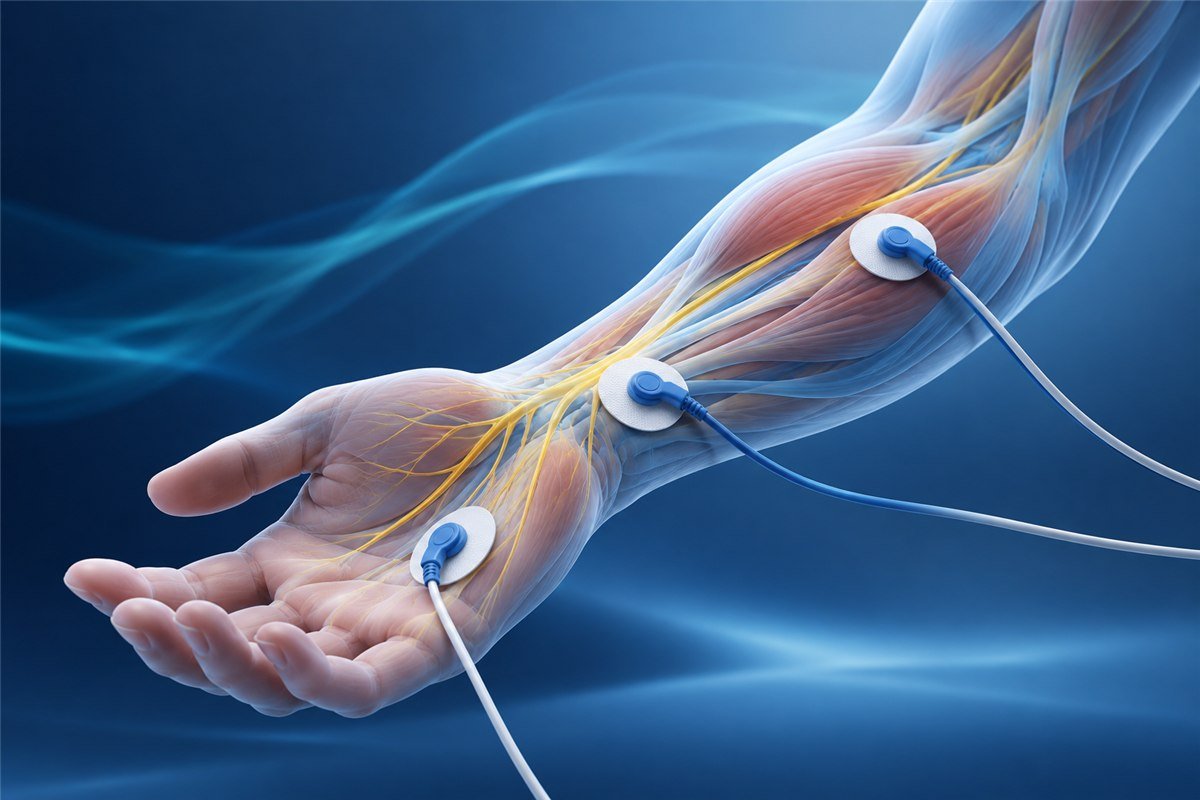
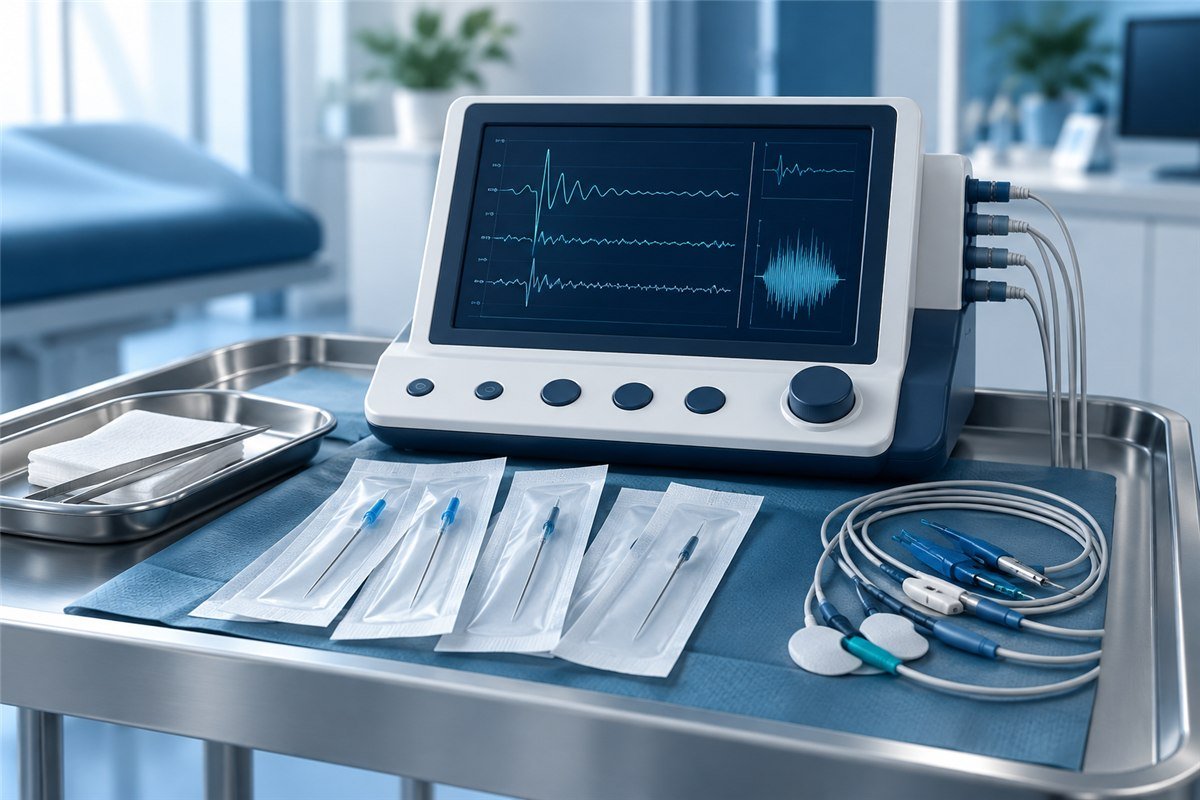
A closer look at nerve & muscle activity.
When may EMG be recommended?
- Muscle weakness and selected muscle-related pain or movement problems
- Nerve and muscle disorders
- ALS / motor neuron disease evaluation
- Radiculopathy — nerve root problems
- Myopathies — muscle diseases
Your clinician decides whether this test is appropriate. Results are interpreted alongside symptoms, examination and other investigations; a test alone does not establish every diagnosis.
What is an EMG?
Electromyography records electrical activity in muscles to help assess muscle function and the nerves controlling them.
Why may it be recommended?
A clinician may recommend testing for unexplained weakness, tingling, numbness or suspected nerve or muscle problems.
How is it performed?
A fine needle records signals from selected muscles at rest and during movement. Related nerve conduction studies use skin sensors and brief electrical pulses.
How should I prepare?
Wear loose clothing and avoid creams on the test area. Tell the clinic about a pacemaker, bleeding disorders or blood-thinning medicines. Do not stop medicines unless instructed.
Will it hurt?
Needle insertion and electrical pulses can cause temporary discomfort. Tell the clinician if you need a pause. Some muscle soreness or bruising can occur afterwards.
How long does testing take?
Testing often takes 30–60 minutes, sometimes longer depending on the muscles and nerves assessed. Confirm with the clinic.
When will I get results?
The recording needs review. Ask the clinic when results will be available and how your doctor will discuss them with you.
Patient information reference: North Bristol NHS Trust — NCS & EMG ↗